
Technical data
Choose the compound the job actually needs
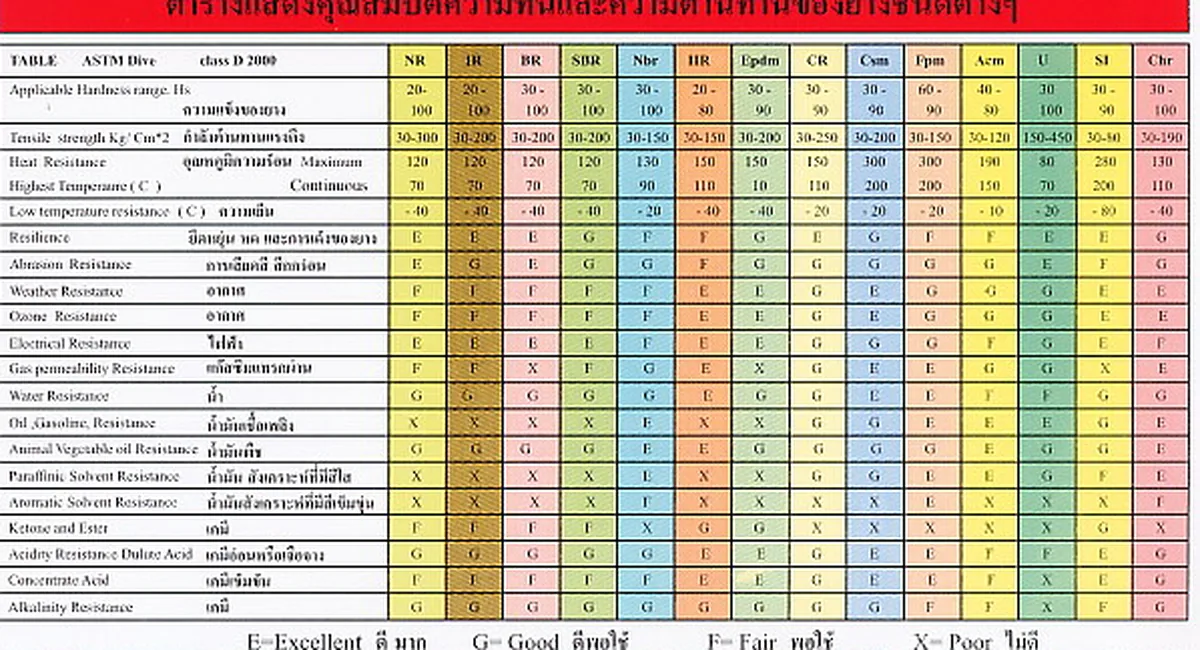
Every compound is good at something and bad at something else. NBR shrugs off oil but not sunlight; EPDM handles weather and hot water but swells in oil. This chart puts all 14 compounds we work with side by side, strengths and limits together.
← Scroll the table sideways for more compounds →
| Property | NR NR | IR IR | BR BR | SBR SBR | NBR NBR | IIR IIR | EPR EPDM / EPR | CR CR | CSM CSM | FPM FKM / FPM | ACM ACM | U AU / EU | SI VMQ | CHR CO / ECO |
|---|---|---|---|---|---|---|---|---|---|---|---|---|---|---|
| Applicable hardness rangeShore A | 20-100 | 20-100 | 30-100 | 30-100 | 30-100 | 20-80 | 30-90 | 30-90 | 30-90 | 60-90 | 40-80 | 30-100 | 30-90 | 30-100 |
| Tensile strengthkg/cm² | 30-300 | 30-200 | 30-200 | 30-200 | 30-200 | 30-150 | 30-200 | 30-250 | 30-200 | 70-150 | 30-120 | 150-450 | 30-80 | 30-190 |
| Maximum temperature°C | 120 | 120 | 120 | 120 | 130 | 150 | 150 | 150 | 150 | 300 | 190 | 80 | 280 | 130 |
| Continuous temperature°C | 70 | 70 | 70 | 70 | 90 | 110 | 110 | 100 | 110 | 200 | 150 | 70 | 200 | 110 |
| Lowest temperature°C | -40 | -40 | -40 | -40 | -20 | -40 | -40 | -20 | -20 | -20 | -10 | -20 | -80 | -40 |
| Resilience | E | E | E | G | F | F | G | E | G | F | F | E | E | G |
| Abrasion resistance | E | G | E | G | G | F | G | G | G | G | G | E | F | G |
| Weather resistance | F | F | F | F | F | E | E | G | E | G | G | G | E | E |
| Ozone resistance | F | F | F | F | F | E | E | G | E | G | G | G | E | E |
| Electrical resistance | E | E | E | E | F | E | E | G | G | G | F | G | E | F |
| Gas permeability resistance | F | F | P | F | G | E | P | G | E | E | G | G | P | E |
| Water resistance | G | G | G | G | G | E | G | G | E | E | F | F | G | G |
| Oil and gasoline resistance | P | P | P | P | E | P | P | G | G | E | E | E | G | E |
| Animal and vegetable oil | G | G | G | G | E | E | G | G | G | G | E | G | G | E |
| Paraffinic solvent | P | P | P | P | E | P | P | G | G | E | E | G | F | E |
| Aromatic solvent | P | P | P | P | F | P | P | P | P | E | P | P | P | F |
| Ketone and ester | F | F | F | F | P | G | G | P | P | P | P | P | G | P |
| Dilute acid | G | G | G | G | G | E | E | G | E | E | F | F | E | G |
| Concentrated acid | F | F | F | F | F | E | E | G | E | E | F | P | E | G |
| Alkalinity resistance | G | G | G | G | G | G | G | G | G | F | F | P | F | G |
These are general reference values for each polymer class under ASTM D2000. Actual figures depend on the recipe, the fillers and the cure. Tell us the real service conditions and we will recommend a specific compound.
The compounds
What each one is for
NR
NRNatural Rubber
Anti-vibration mounts, rollers, shock absorbing parts
Mixed in-houseIR
IRIsoprene Rubber
Substitute for NR where batch consistency matters
BR
BRButadiene Rubber
Blended with other polymers to raise abrasion resistance
SBR
SBRStyrene Butadiene Rubber
General parts, gaskets, pads with no oil contact
Mixed in-houseNBR
NBRNitrile Rubber
O-rings, oil seals, gaskets for fuel and oil systems
Mixed in-houseIIR
IIRButyl Rubber
Gas-tight seals, diaphragms, weatherproofing
EPR
EPDM / EPREthylene Propylene Rubber
Sanitary parts, hot-water systems, outdoor weather seals
Mixed in-houseCR
CRChloroprene Rubber (Neoprene)
Dust boots, cable covers, parts needing ozone and moderate oil resistance
Mixed in-houseCSM
CSMHypalon (CSM)
Chemical and concentrated-acid service, tank lining
FPM
FKM / FPMFluoroelastomer (Viton)
Seals to 300°C, aggressive fuel and chemical service
Mixed in-houseACM
ACMPolyacrylic Rubber
Transmission and engine oil seals at elevated temperature
U
AU / EUUrethane Rubber
High tensile duty, rollers, hydraulic seals
SI
VMQSilicone Rubber
Electrical and food-grade parts, −80 to 280°C service
Mixed in-houseCHR
CO / ECOEpichlorohydrin Rubber
Fuel systems requiring low permeation, automotive hoses and seals
A quick way to choose
Three questions that narrow it down
- What does the part touch? Oil or fuel — start at NBR. Hot water, steam or sunlight — start at EPDM. Aggressive chemicals — go to FKM.
- What temperature? Natural rubber tops out near 70°C continuous, NBR reaches 90°C, while silicone and Viton run to 200°C continuous.
- How hard should it be? Most seals sit at 70 ± 5 Shore A. Raise it for high compressive load, drop it to conform to a rough face.
Start a project
Send us a drawing and we will quote it
Tell us the dimensions, the hardness you need, what the part will contact and your batch size. We will come back with a compound recommendation and a price.